
Managing diabetes requires daily attention to food, exercise, medication, and healthy lifestyle habits. Among the many questions people ask, understanding diabetes and alcohol is especially important because alcohol can affect blood sugar levels in different ways. While some individuals with diabetes may choose to drink occasionally, it is essential to understand how alcohol interacts with the body before making that decision.
Moreover, alcohol does not affect everyone in the same way. Factors such as the type of diabetes, medications, food intake, and the amount of alcohol consumed can all influence blood glucose levels. Therefore, learning how alcohol impacts diabetes can help individuals make informed choices and reduce potential health risks.
With proper knowledge and guidance from healthcare professionals, many people with diabetes can better understand their personal risks and manage their condition more effectively.
Understanding Diabetes and Alcohol and Their Connection
The relationship between diabetes and alcohol is more complex than many people realize. Diabetes affects how the body manages blood glucose, while alcohol influences the liver, which plays a major role in maintaining healthy blood sugar levels.
Normally, the liver releases stored glucose when blood sugar drops. However, after drinking alcohol, the liver focuses on processing alcohol before performing its normal functions. As a result, blood sugar levels may decrease, especially several hours after drinking.
Additionally, alcoholic beverages contain varying amounts of carbohydrates and sugar. Some drinks may initially increase blood sugar, while others may later contribute to lower glucose levels. Therefore, understanding the specific type of beverage is important.
People who take insulin or certain diabetes medications may face an increased risk of low blood sugar after drinking alcohol. Consequently, healthcare providers often recommend careful monitoring when alcohol is consumed.
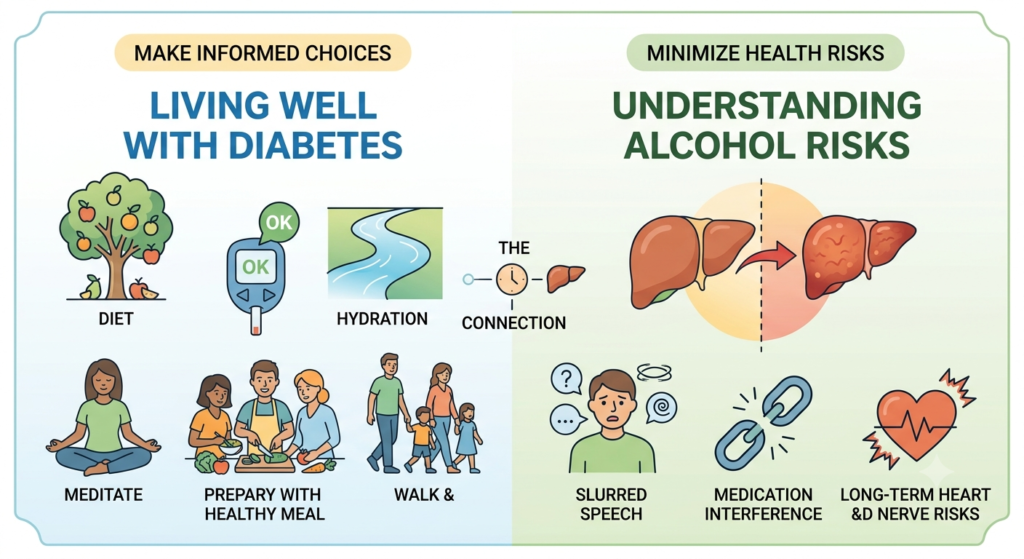
How Diabetes and Alcohol Affect Blood Sugar Levels
One of the biggest concerns involving diabetes and alcohol is the effect on blood glucose control. Alcohol can create unpredictable changes, making diabetes management more challenging.
For example, sugary mixed drinks or sweet wines may temporarily raise blood sugar. However, several hours later, alcohol may cause blood glucose to fall, particularly when consumed without food.
Furthermore, symptoms of low blood sugar can resemble signs of alcohol intoxication. Dizziness, confusion, slurred speech, and difficulty concentrating may occur in both situations. Therefore, recognizing the difference is important for personal safety.
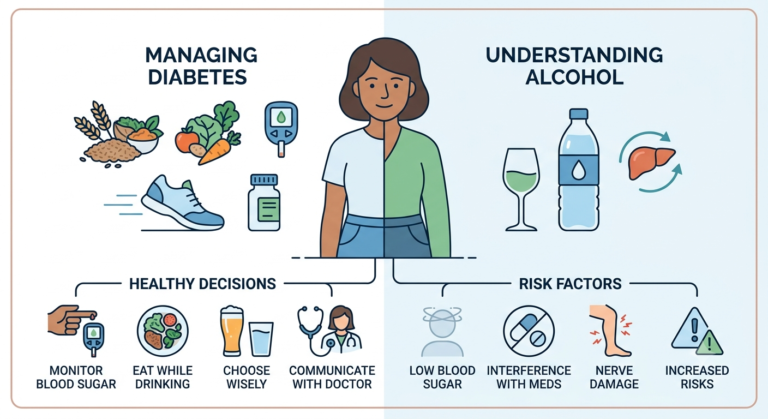
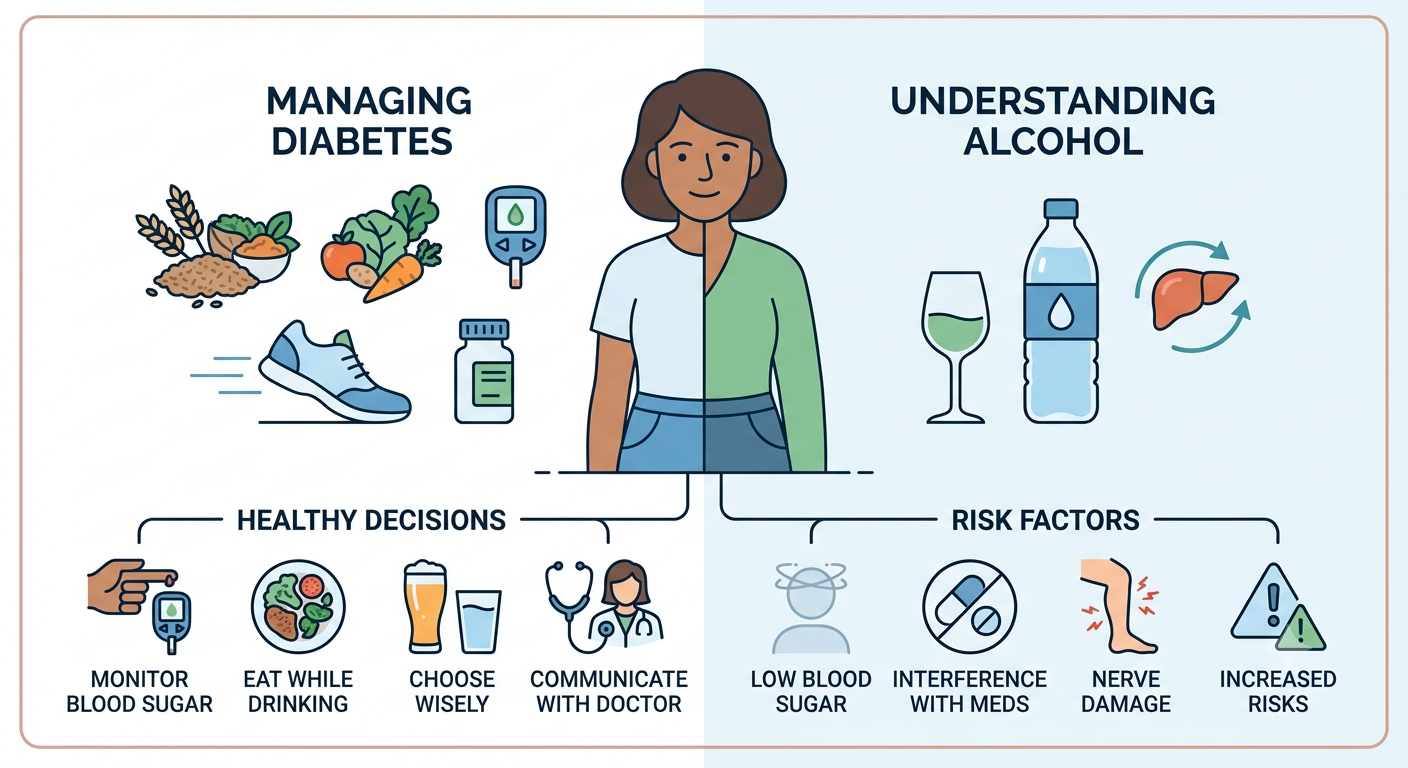
Regular blood glucose monitoring becomes especially valuable when drinking alcohol. Checking levels before, during, and after drinking helps identify unexpected changes and supports better decision-making.
Eating balanced meals while consuming alcohol may also help reduce sudden blood sugar fluctuations.
Health Risks Associated With Diabetes and Alcohol
Understanding the possible risks of diabetes and alcohol allows individuals to make healthier decisions. Although moderate alcohol consumption may be appropriate for some people, excessive drinking increases health risks.
Heavy alcohol use may contribute to poor blood sugar control, increased blood pressure, weight gain, and liver problems. Additionally, alcohol may interfere with diabetes medications or reduce awareness of changing blood sugar levels.
Long-term alcohol misuse can also affect nerve health. Since diabetes already increases the risk of nerve damage, alcohol may worsen this condition over time.
Heart health is another important consideration. Individuals with diabetes often have a higher risk of cardiovascular disease. Therefore, discussing alcohol use with a healthcare provider is important when managing overall health.
Moreover, alcohol may reduce motivation to follow healthy routines, including balanced eating, exercise, and medication schedules.
Managing Diabetes and Alcohol Safely
Many healthcare providers encourage careful planning when discussing diabetes and alcohol. Responsible choices can help reduce health risks while supporting better diabetes management.
Eating before drinking is often recommended because food helps stabilize blood sugar levels. Additionally, choosing beverages with lower sugar content may reduce sudden glucose increases.
Hydration also plays an important role. Drinking water alongside alcoholic beverages supports overall wellness and may help reduce dehydration.
People should also monitor blood glucose regularly, especially after drinking. Since delayed low blood sugar can occur several hours later, checking levels before bedtime may also be helpful.
Carrying medical identification that indicates diabetes can improve safety during emergencies. Furthermore, informing trusted friends or family members about diabetes allows them to recognize signs of low blood sugar if assistance becomes necessary.
Choosing Alcoholic Beverages Wisely
Not all alcoholic beverages affect blood sugar in the same way. Therefore, making informed choices is another important part of managing diabetes and alcohol.
Some beverages contain large amounts of added sugar, while others contain fewer carbohydrates. Sweet cocktails, flavored drinks, and dessert wines may increase blood sugar more than lighter options.
Portion size also matters. Larger servings increase alcohol intake and may create greater challenges for blood sugar control.
Additionally, avoiding drinks on an empty stomach reduces the risk of low blood sugar. Pairing alcohol with balanced meals containing protein, healthy fats, and complex carbohydrates supports more stable glucose levels.
Healthcare professionals can also provide individualized recommendations based on medications, health conditions, and diabetes type.
Lifestyle Habits That Support Diabetes Management
Managing diabetes involves more than monitoring alcohol intake. Healthy daily habits contribute significantly to long-term blood sugar control and overall wellness.
Regular physical activity helps improve insulin sensitivity and supports healthy weight management. Additionally, balanced nutrition provides steady energy while reducing blood sugar fluctuations.
Quality sleep also influences glucose regulation. Therefore, maintaining consistent sleep habits supports overall diabetes care.
Routine healthcare appointments allow providers to monitor blood sugar trends, medication effectiveness, and possible complications. Furthermore, discussing alcohol use openly helps healthcare professionals provide appropriate guidance.
Stress management also plays an important role. Chronic stress may influence blood sugar levels and affect healthy decision-making. Consequently, relaxation techniques, hobbies, and emotional support contribute to better diabetes management.
Common Misunderstandings About Diabetes and Alcohol
Several misconceptions continue to create confusion about diabetes and alcohol. Some people believe alcohol always raises blood sugar, while others assume it always lowers glucose levels. In reality, both situations may occur depending on the type of beverage, medications, food intake, and personal health.
Another misunderstanding involves “sugar-free” alcoholic drinks. Although these beverages may contain less sugar, alcohol itself can still influence blood glucose regulation.
Some individuals also underestimate delayed low blood sugar after drinking. Since this effect may occur several hours later, ongoing monitoring remains important.
Education helps individuals understand these complexities and make safer decisions based on accurate information rather than common myths.
Living Well While Managing Diabetes and Alcohol
Living with diabetes does not simply involve avoiding certain foods or beverages. Instead, it requires making informed choices that support long-term health. Understanding diabetes and alcohol allows individuals to balance personal preferences with safe diabetes management.
By monitoring blood sugar, choosing beverages carefully, eating balanced meals, staying hydrated, and following medical advice, many people can better manage potential risks. Moreover, regular communication with healthcare providers helps ensure that personal treatment plans continue meeting individual needs.
With education, preparation, and healthy lifestyle habits, people living with diabetes can make thoughtful decisions that protect their health while supporting a better quality of life.