Oral health often reflects overall health, and serious dental problems can sometimes point to deeper medical concerns. One of the most well-known dental complications associated with methamphetamine use is meth mouth. This condition describes the severe tooth decay, gum disease, and oral damage that frequently develop after prolonged methamphetamine use. Although the damage can be extensive, early treatment and addiction recovery can help improve both oral and overall health.
Moreover, methamphetamine affects far more than the teeth. It impacts saliva production, eating habits, oral hygiene, and blood flow to the gums. Consequently, these combined effects can rapidly accelerate tooth decay and increase the risk of permanent dental damage.
Understanding how meth mouth develops is an important step toward prevention, early treatment, and long-term recovery.
What Is Meth Mouth?
Meth mouth is a term used to describe the severe dental damage commonly associated with chronic methamphetamine use. While the name is not an official medical diagnosis, dentists and healthcare professionals frequently use it to describe a pattern of advanced tooth decay and gum disease.
People with meth mouth often experience broken teeth, severe cavities, inflamed gums, enamel erosion, and significant tooth loss. Additionally, many individuals report chronic dry mouth, persistent bad breath, and oral infections. The condition usually develops gradually. However, without treatment, dental damage can progress rapidly and eventually affect chewing, speaking, nutrition, and self-confidence. Fortunately, professional dental care combined with addiction treatment can significantly improve long-term outcomes.
How Methamphetamine Causes Meth Mouth
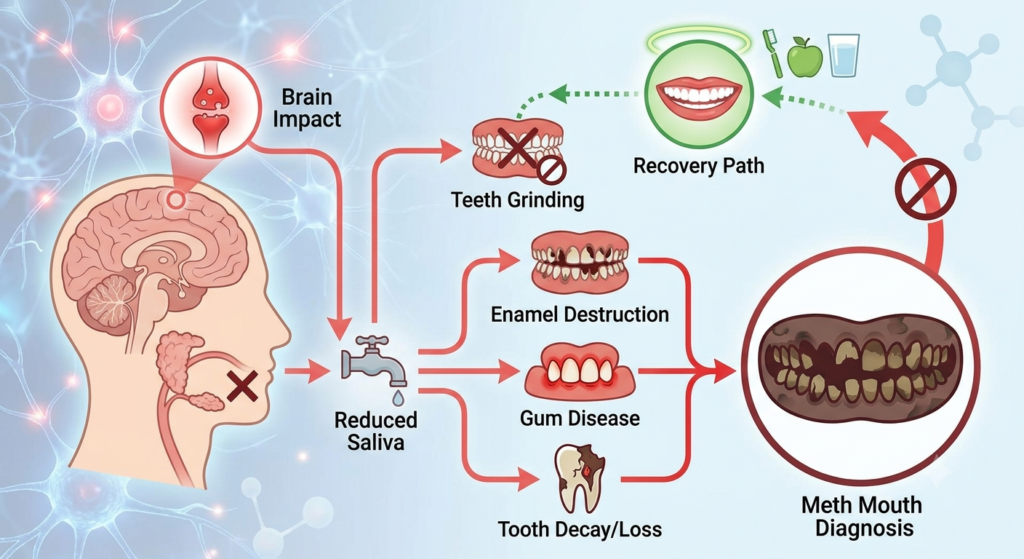
Understanding how meth mouth develops requires examining the effects methamphetamine has on the entire body. One of the biggest contributors is reduced saliva production. Saliva naturally protects teeth by washing away food particles, neutralizing acids, and controlling bacteria. When methamphetamine causes dry mouth, harmful bacteria multiply more easily.
Additionally, methamphetamine often causes users to clench or grind their teeth. Continuous grinding places excessive pressure on tooth enamel, increasing fractures and wear. Many individuals also consume sugary drinks during meth use because cravings for sweet beverages increase. Combined with poor oral hygiene, these habits significantly raise cavity risk.
Furthermore, methamphetamine may reduce appetite and cause nutritional deficiencies that weaken oral tissues over time. Together, these factors create an environment where severe tooth decay develops much faster than under normal circumstances.
Common Symptoms of Meth Mouth
Recognizing the warning signs of meth mouth encourages earlier dental evaluation and treatment. One of the first symptoms is persistent dry mouth. Individuals may also notice increased tooth sensitivity when eating hot, cold, or sweet foods. As damage progresses, cavities become larger and more numerous. Teeth may appear dark, discolored, chipped, or broken. Gum disease also becomes common. Red, swollen, or bleeding gums often indicate inflammation caused by bacterial buildup.
Additionally, bad breath, painful chewing, loose teeth, oral sores, and recurring infections frequently develop as the condition worsens. Because these symptoms may resemble other dental diseases, professional examination remains essential for accurate diagnosis.
Why Dry Mouth Plays a Major Role
One of the leading causes of meth mouth is chronic dry mouth, also known as xerostomia. Normally, saliva protects every surface inside the mouth. It removes food debris, balances acidity, and helps repair early enamel damage through natural minerals.
However, methamphetamine significantly reduces saliva production. Consequently, acids remain on tooth surfaces longer while bacteria multiply rapidly. Without sufficient saliva, cavities form more quickly, gums become irritated, and oral infections become increasingly common.
Hydration alone cannot fully replace saliva’s protective role. Therefore, addressing methamphetamine use becomes essential for improving long-term oral health.
Other Lifestyle Factors That Increase Dental Damage
Although methamphetamine directly affects oral tissues, several lifestyle habits also contribute to meth mouth. Individuals struggling with addiction may brush and floss less frequently, allowing plaque and bacteria to accumulate. Sleep disruption, poor nutrition, dehydration, and irregular healthcare appointments further increase oral health risks.
Additionally, many people delay dental visits because of anxiety, financial concerns, or fear of judgment. Consequently, dental problems often become severe before professional treatment begins. Smoking tobacco alongside methamphetamine may also increase gum disease and delay healing after dental procedures. Addressing these lifestyle factors supports both dental recovery and overall health improvement.
How Dentists Diagnose Meth Mouth
Dentists diagnose meth mouth by evaluating oral health, reviewing symptoms, and discussing medical history. During the examination, providers assess cavities, enamel wear, gum disease, broken teeth, oral infections, and tooth mobility. Dental X-rays often reveal damage beneath the gumline or inside affected teeth.
Healthcare providers may also ask about substance use history because understanding the underlying cause helps guide treatment planning. Importantly, dental professionals focus on providing care rather than judgment. Their primary goal is restoring oral function while supporting long-term health. Early diagnosis allows treatment before additional teeth become permanently damaged.
Treatment Options for Meth Mouth
Successful treatment for meth mouth usually requires both dental care and addiction recovery. Dentists first address pain, infection, and emergency dental problems. Cavities may be repaired with fillings, while severely damaged teeth may require crowns or extraction. Deep cleanings help remove plaque and treat gum disease before it progresses further.
Some individuals require root canal treatment or dental implants to restore chewing ability and appearance. At the same time, addiction treatment plays an equally important role. Without stopping methamphetamine use, new dental damage may continue despite treatment. Many recovery programs coordinate medical care, counseling, behavioral therapy, and dental services to improve overall recovery outcomes.
Can Meth Mouth Be Prevented?
Preventing meth mouth begins with avoiding methamphetamine use whenever possible. However, individuals currently receiving addiction treatment can still take important steps to reduce further dental damage. Daily brushing with fluoride toothpaste strengthens enamel while removing harmful bacteria.
Flossing regularly supports healthy gums by cleaning between teeth. Drinking water frequently may reduce dry mouth symptoms, while sugar-free gum can help stimulate saliva production for some individuals. Regular dental checkups allow dentists to identify problems early before extensive treatment becomes necessary. Additionally, balanced nutrition supports stronger teeth, healthier gums, and improved healing throughout recovery. Every healthy habit contributes to protecting remaining teeth while supporting long-term oral health.
Recovery Supports Better Oral Health
Treating meth mouth involves more than repairing damaged teeth. Lasting improvement depends on addressing methamphetamine addiction through comprehensive recovery. Professional addiction treatment helps individuals manage cravings, understand addiction triggers, and develop healthier coping strategies. As substance use ends, saliva production often begins improving gradually. Consequently, the mouth regains some of its natural protective abilities.
Many individuals also establish healthier daily routines that include proper nutrition, hydration, oral hygiene, and regular healthcare appointments. Although recovery requires commitment, every positive step supports both physical healing and emotional well-being. Improved oral health frequently becomes one of the visible signs of successful long-term recovery.
Protecting Your Smile and Overall Health
Meth mouth highlights how substance use can affect nearly every aspect of physical health, including the teeth and gums. Severe tooth decay, gum disease, dry mouth, and broken teeth often develop through a combination of reduced saliva, poor oral hygiene, unhealthy eating habits, and the direct effects of methamphetamine.
Fortunately, recovery is possible. Early dental treatment, professional addiction care, healthy daily habits, and ongoing medical support can help restore oral health while improving overall quality of life. Seeking help early often reduces long-term complications and creates better opportunities for lasting recovery.
A healthier smile begins with addressing both the dental damage and the addiction behind it. With the right support, individuals can rebuild their oral health, regain confidence, and move toward a healthier future.