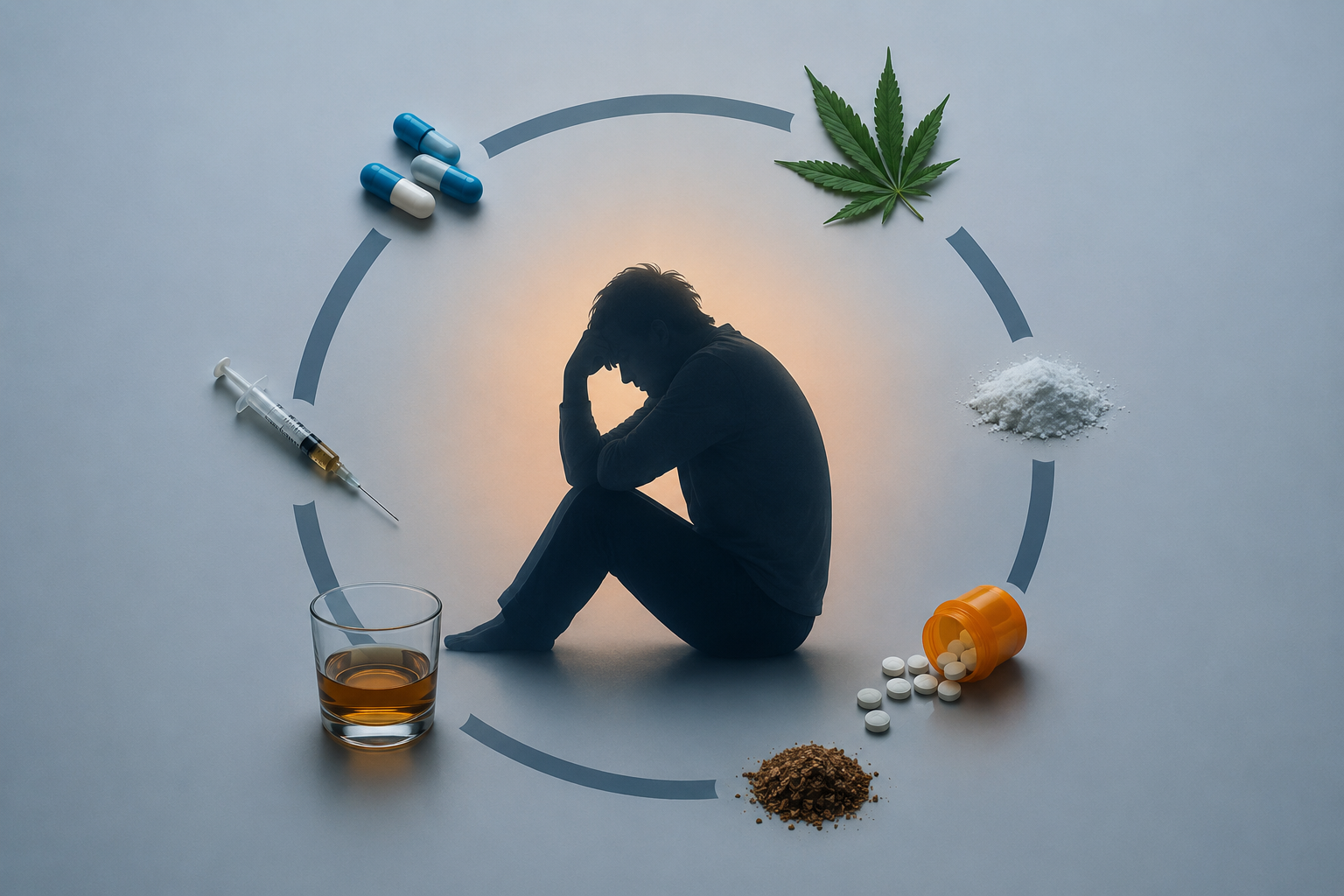

Substance use can become more complicated when a person regularly uses more than one drug. Polysubstance use refers to using multiple substances either at the same time or during the same period. These substances may include alcohol, opioids, stimulants, sedatives, cannabis, or prescription medicines used outside medical guidance. Because each drug can affect the body differently, combining them can create unpredictable health risks.
Moreover, using several substances can make it harder to recognize which drug is causing a particular symptom. It can also make diagnosis and treatment more complex. The National Institute on Drug Abuse notes that people may develop more than one substance use disorder, and treating these overlapping problems can require a comprehensive approach.
Therefore, understanding the signs and risks is important for individuals, families, and caregivers. Early recognition can encourage someone to seek professional support before substance use causes more serious physical, emotional, or social problems.
What Can Lead to Polysubstance Use?
There is no single reason why someone begins using multiple substances. Instead, several personal, social, and environmental factors may contribute to the pattern. For example, a person may combine substances because they believe one drug will change the effects of another. Someone might also use different substances because their tolerance has increased. In other cases, a person may simply have access to several drugs and gradually develop a pattern of combined use.
Furthermore, mental health concerns can play a role. Anxiety, depression, trauma, chronic stress, and other emotional challenges may influence substance use. However, using drugs or alcohol to manage emotional pain can create additional problems over time.
The changing illicit drug supply is another concern. Some drugs may contain unexpected substances, including fentanyl. As a result, people may face overdose risks without knowing exactly what they have taken. SAMHSA warns that illicit or counterfeit substances can contain unexpected ingredients, increasing the potential for serious harm. Consequently, polysubstance use should not be viewed simply as a matter of poor choices. It can involve addiction, mental health challenges, social pressures, and changes in the drug supply. A compassionate approach can make it easier for someone to accept help.

Health Risks Associated With Polysubstance Use
Combining substances can affect several systems in the body. The exact effects depend on the drugs involved, the person’s health, the amount used, and other factors. Nevertheless, mixing substances can increase the chance of serious complications. One major concern is breathing. Certain combinations can suppress the central nervous system and slow breathing. For example, opioids combined with alcohol or sedating medications can create a particularly dangerous situation. SAMHSA identifies mixing opioids with alcohol, anxiety medications, and other substances as an overdose risk.
Stimulants can create different problems. They may increase heart rate and blood pressure and place additional stress on the cardiovascular system. When stimulants are combined with other drugs, the overall effects can become difficult to predict. Meanwhile, repeated substance use can affect memory, concentration, mood, sleep, and decision-making. Some people may experience anxiety, depression, paranoia, confusion, or other mental health symptoms.
Long-term effects may also involve the liver, kidneys, heart, brain, and other organs. In addition, continued use can contribute to dependence and substance use disorder. For these reasons, people should not assume that combining smaller amounts of different substances is automatically safe. The interaction between drugs can vary greatly, and an individual’s tolerance can change over time.
Recognizing the Signs of Polysubstance Use
Identifying multiple substance use is not always straightforward. Different drugs produce different symptoms, while some signs may resemble ordinary changes in mood or behavior. However, several warning signs may deserve attention. These can include sudden mood changes, unusual irritability, confusion, impaired coordination, changes in sleep, changes in appetite, withdrawal from family, and problems meeting responsibilities.
There may also be physical clues. Bloodshot eyes, unusual pupil changes, slurred speech, unexplained injuries, frequent nosebleeds, or declining physical health can sometimes indicate substance use. Finding multiple types of drug-related equipment may provide another warning sign. Furthermore, social changes can become noticeable. Someone may begin missing work or school, experience financial problems, lose interest in normal activities, or withdraw from friends and family.
Still, no single sign proves that someone is using multiple substances. Therefore, avoid making accusations based on one observation. Instead, consider the overall pattern and approach the person with concern.
Short-Term and Long-Term Effects
The immediate effects of combined substance use can range from mild discomfort to life-threatening emergencies. Depending on the substances involved, a person may experience nausea, dizziness, confusion, impaired judgment, rapid heart rate, breathing problems, seizures, or loss of consciousness. Over time, repeated use can produce more serious consequences. These may include dependence, cognitive problems, cardiovascular complications, organ damage, worsening mental health symptoms, and increased overdose risk.
Moreover, NIDA research identifies polysubstance use as an important factor in fatal overdose and other harmful outcomes. Another challenge involves withdrawal. When someone has developed dependence on several substances, stopping suddenly can be difficult and, in some cases, dangerous. Certain substances require medically supervised withdrawal management. Therefore, people should seek professional advice rather than attempting an abrupt detox without appropriate guidance.
When Does Someone Need Professional Help?
Professional support may be appropriate when substance use begins affecting health, relationships, employment, education, finances, or daily responsibilities. Likewise, help may be necessary when someone repeatedly tries to stop but cannot maintain abstinence. Strong cravings, withdrawal symptoms, increasing tolerance, or continued use despite harmful consequences can also indicate a substance use disorder.
Importantly, a person does not need to wait for a major crisis before seeking treatment. Early support can help identify the substances involved, assess physical and mental health, and create an appropriate treatment plan. A healthcare professional or addiction specialist can determine whether a person may benefit from medical detox, residential care, outpatient treatment, behavioral therapy, medication, peer support, or a combination of services.
Treatment Options for Multiple Substance Use
Treatment should reflect the individual’s specific needs. Since different substances can create different risks, professionals may begin with a comprehensive assessment. Medical detox can provide monitoring and support during withdrawal. However, detox alone does not address the underlying causes of addiction. Therefore, ongoing treatment is often important after withdrawal management.
Behavioral therapies can help people understand triggers, change unhealthy patterns, develop coping skills, and manage cravings. Cognitive behavioral therapy is one approach commonly used in addiction treatment. Medication may also have an important role for certain substance use disorders. For example, medications such as methadone and buprenorphine can be used as part of treatment for opioid use disorder. Treatment decisions should always come from qualified healthcare professionals.
In addition, family counseling can help relatives understand addiction and improve communication. Peer support groups may provide another source of encouragement and accountability. Because polysubstance use can involve several substances at once, treatment should address the complete picture rather than focusing on only one drug.
How Families Can Support Recovery
Supporting someone with addiction can be difficult. Nevertheless, family members can make a meaningful difference by approaching the situation with patience and compassion. First, learn about the substances involved and the available treatment options. Then, choose a calm time to discuss your concerns. Use specific observations rather than accusations.
For example, saying that you are concerned about missed work or changes in behavior may open a conversation more effectively than labeling someone as an addict. Furthermore, encourage professional support. You can offer to help find a treatment provider or attend an appointment with the person. At the same time, establish healthy boundaries that protect your own physical, emotional, and financial well-being.
Recovery rarely follows a perfectly straight path. Therefore, setbacks should not automatically be treated as failure. Instead, they can signal the need to review the treatment plan and strengthen support.
Responding to an Overdose Emergency
An overdose can become life-threatening within minutes. Signs may include inability to wake, very slow or stopped breathing, blue or purple lips, unusual gurgling sounds, or severe loss of responsiveness. SAMHSA advises calling 911 immediately when opioid overdose is suspected and using naloxone or nalmefene when available. If opioids may be involved, having naloxone available can be lifesaving. Families and caregivers can ask healthcare professionals, pharmacies, or community programs about access and proper use.
Most importantly, do not delay emergency care while trying to determine exactly which substances were taken. When multiple substances may be involved, the situation can be especially unpredictable.
Taking the First Step toward Recovery
Living with addiction can feel overwhelming, especially when several substances are involved. However, effective support is available. A professional assessment can help identify immediate risks and guide the next stage of care. The most important step is recognizing that polysubstance use deserves serious attention. With appropriate treatment, ongoing support, and a plan that addresses both substance use and related mental health needs, recovery is possible.
Families also have an important role. Compassionate conversations, practical support, clear boundaries, and professional guidance can help create a stronger foundation for recovery. Above all, seeking help early can reduce risks and give individuals a better opportunity to regain control of their health and daily lives.